
Explore Expert Insights, Strategic Research, and Global Thought Leadership
Clear thinking for complex systems.
Our publications translate systems complexity into actionable insight—through original research, strategic frameworks, and global roundtable takeaways.
Featured
Highlighted insights from our latest research and thought leadership.

From Disclosure to the Cost of Capital: How EU Sustainability Regulation Is Reshaping Board Oversight examines how Europe’s expanding sustainability regulatory framework is changing the relationship between corporate reporting, financial risk, and governance. What began largely as a transparency agenda has developed into a broader system in which sustainability considerations increasingly influence risk assessment, financing conditions, and the responsibilities of corporate supervisory boards.
The paper traces the evolution of key regulatory instruments, including the EU Taxonomy, Corporate Sustainability Reporting Directive (CSRD), European Sustainability Reporting Standards (ESRS), Corporate Sustainability Due Diligence Directive (CSDDD), and European Banking Authority (EBA) guidelines on ESG risks. It also examines the recent Omnibus reforms and their implications for the scope and implementation of sustainability requirements. Against this regulatory backdrop, the paper explores how ESG risks are becoming increasingly embedded in financial risk management and how this shift may affect capital allocation and the cost of financing for different business models.
The paper ultimately considers what this transformation means for corporate governance. As sustainability regulation moves beyond disclosure toward risk management and financial decision-making, supervisory boards face a growing responsibility to oversee ESG data, assess sustainability-related risks, and integrate longer-term environmental and social considerations into corporate strategy. The paper positions this evolution not simply as an expansion of compliance obligations, but as a shift in how sustainability becomes relevant to corporate risk, capital, and long-term value creation.

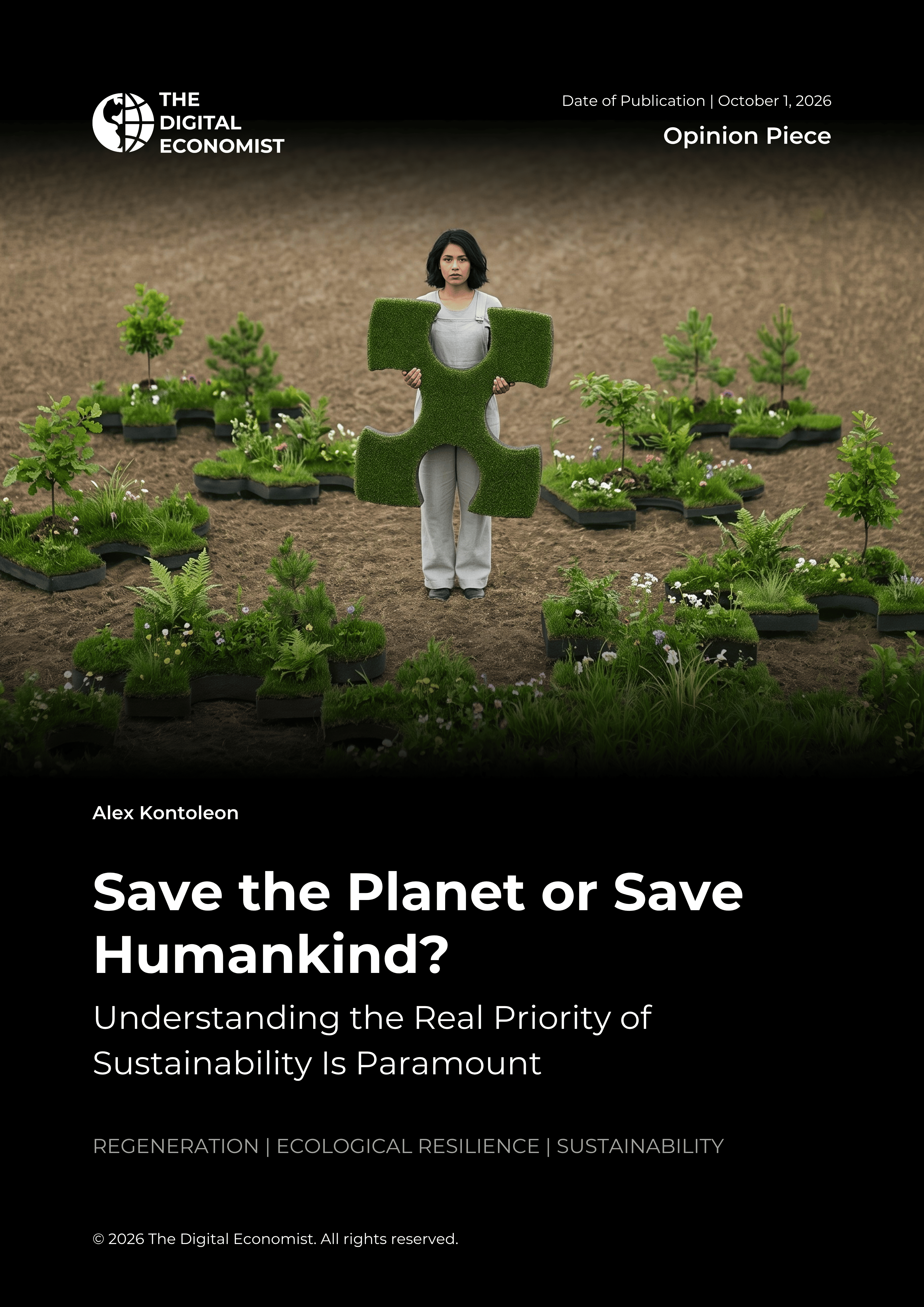
Save the Planet or Save Humankind? examines the paradox at the heart of modern sustainability: humanity has achieved unprecedented levels of prosperity, longevity, and technological advancement, yet these gains have come at an increasing ecological cost. The paper explores why decades of sustainability efforts have struggled to reverse environmental degradation and argues that the challenge may lie not only in what we are doing, but in how we have framed the problem.
The paper examines the assumptions underlying conventional sustainability thinking, including the tendency to view environmental decline through a linear, extractive model of resource use. Drawing on the planetary boundaries framework, regenerative economics, ecological systems thinking, and research on circular and nature-positive approaches, it explores the distinction between sustaining existing systems and actively regenerating the conditions that support human prosperity. It argues that the planet itself does not need to be “saved”; rather, the focus should be on maintaining the ecological conditions that make human life, abundance, and continued prosperity possible.
The paper ultimately calls for a new alignment between economic activity and the regenerative processes of the natural world. Rather than framing sustainability as a moral obligation or a choice between prosperity and the planet, it positions regeneration as the next evolution of sustainability—one that aligns economic incentives, long-term resilience, and human prosperity with the ecological systems on which they depend.
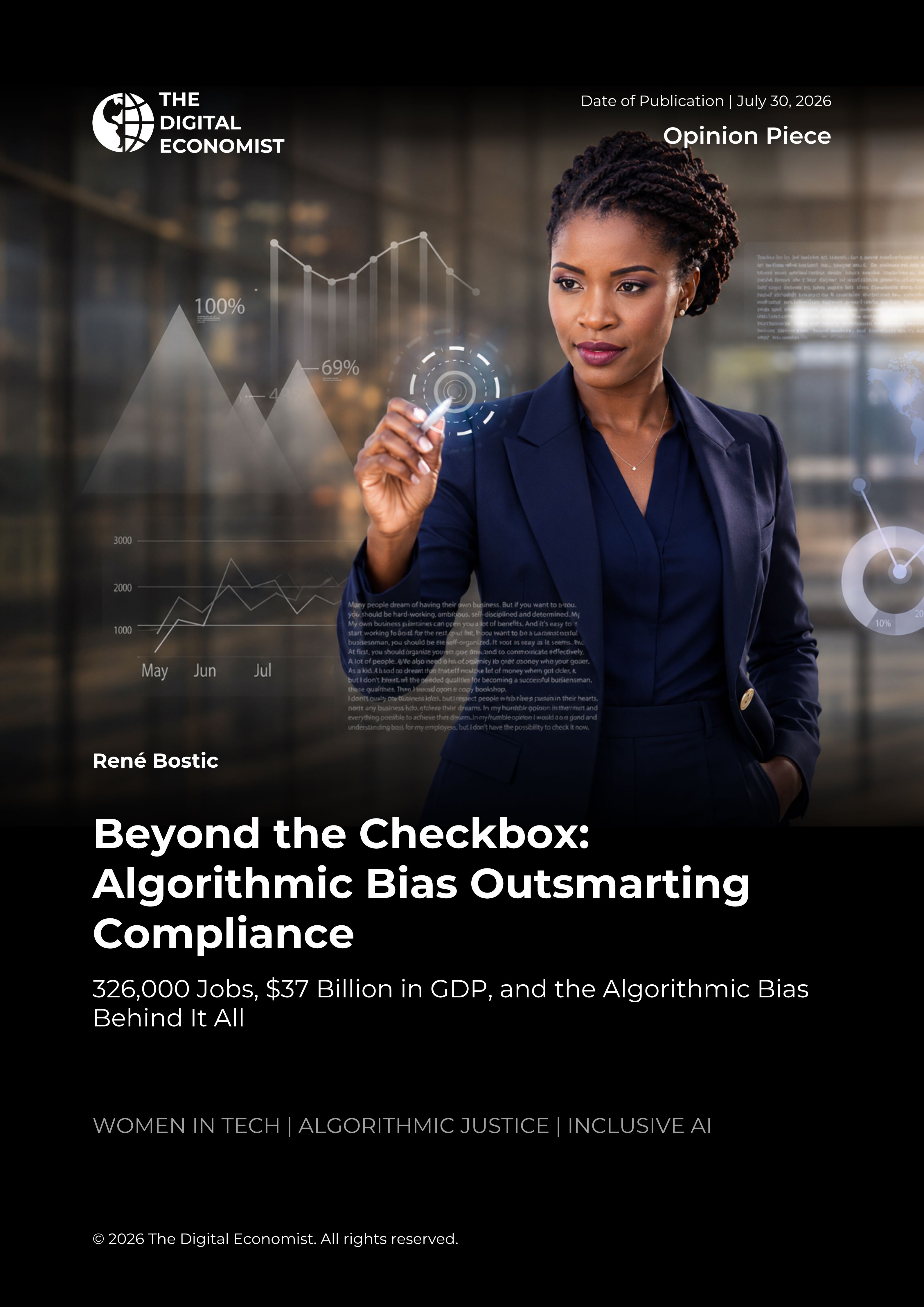
Beyond the Checkbox: Algorithmic Bias Outsmarting Compliance: 326,000 Jobs, $37 Billion in GDP, and the Algorithmic Bias Behind It All examines the escalating unemployment crisis affecting Black women in the United States, documenting the loss of an additional 326,000 jobs in 2025 and the broader economic consequences, including an estimated $37 billion reduction in US GDP. This opinion piece explores how historical bias, AI-driven employment systems, and evolving legal and policy landscapes are converging to reshape workforce outcomes.
The analysis addresses the following key areas:
- Presents evidence from US Bureau of Labor Statistics (BLS) data, federal litigation, and news reporting to illustrate the scale and economic impact of the crisis.
- Examines how artificial intelligence accelerates job displacement through algorithmic bias and automation, with an outsized impact on Black women who are heavily concentrated in AI-vulnerable occupations, including office and administrative support, healthcare support, and sales-related roles.
- Introduces Causal Fairness as the gold standard first step in an AI Fairness Intervention Workflow, explaining how it moves beyond identifying what disparate outcomes are occurring to understanding why they occur, through techniques such as mapping hidden bias pathways, identifying proxy variables, and providing mathematical proof of direct versus indirect discrimination.
- Recommends five actionable priorities for industry leaders, including intersectional bias testing, embedding fairness into AI systems from the outset, and aligning with emerging governance frameworks such as the Colorado AI Act and the EU AI Act.
Ultimately, this paper highlights that organizations can lead the way in developing responsible AI by making intersectional fairness a fundamental design principle rather than an afterthought. Those who act now can mitigate litigation risks, strengthen AI governance, recover lost economic productivity, and establish themselves as employers of choice for highly skilled, high-performing talent. Advancing intersectional AI fairness is both an ethical obligation and a measurable competitive advantage.
All Publications



Join our newsletter
Subscribe to our newsletter
Get the latest updates from The Digital Economist

One World Trade Center, 85th floor, New York City, NY 10007
1717 N St NW, Washington, DC 20036
info@thedigitaleconomist.com





One World Trade Center, 85th floor, New York City, NY 10007
1717 N St NW, Washington, DC 20036
info@thedigitaleconomist.com