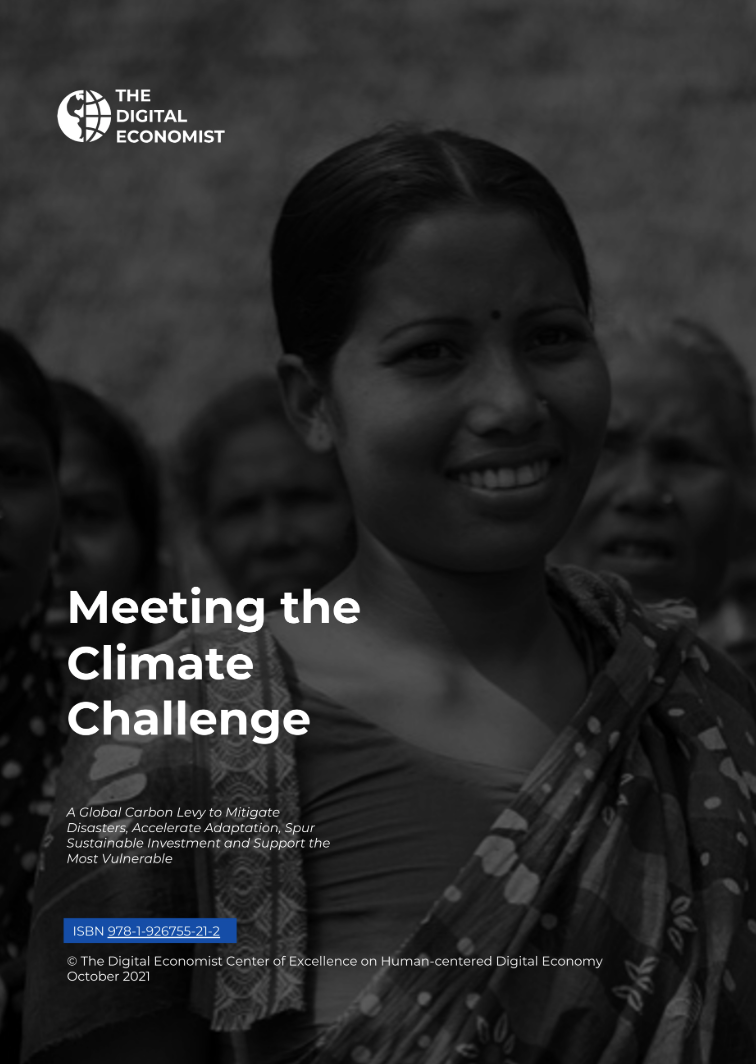
Climate change has reached a critical inflection point, where scientific consensus is clear but collective action remains insufficient. Meeting the Climate Challenge examines the outcomes and limitations of COP26 in Glasgow, highlighting the gap between commitments—such as the Paris Agreement’s 1.5°C target and the unresolved US$100 billion annual climate finance pledge—and the scale of action required. The paper situates the climate crisis within a broader context of global inequality, pandemic disruption, and systemic risk, arguing that current approaches to mitigation and adaptation are fragmented and inadequate to meet the urgency of the moment.
The paper analyzes the structural challenges shaping climate action, including continued reliance on fossil fuels, rising emissions, and the uneven distribution of climate impacts across populations and geographies. It draws on findings from global institutions such as the IPCC and the International Energy Agency to underscore escalating risks—from extreme weather events and sea-level rise to long-term ecological disruption—and highlights how existing policy mechanisms have failed to meaningfully alter consumption patterns or emissions trajectories. At the same time, it emphasizes that climate resilience cannot be separated from broader issues of equity, development, and inclusion, particularly for vulnerable and least advantaged populations.
The paper advances a targeted policy agenda centered on the introduction of a global carbon levy on fossil fuel production as a scalable and coordinated financing mechanism. It proposes a production-based levy—measured per barrel of oil equivalent and independent of consumption taxes—to generate revenues significantly exceeding current climate finance commitments, enabling investment in mitigation and adaptation. The paper calls for international cooperation to establish governance structures for fund allocation, ensure equitable distribution, and align climate action with broader development goals. Ultimately, it positions the global carbon levy as both a practical instrument and a catalyst for accelerating the transition to a low-carbon, inclusive, and resilient global economy.








.png)