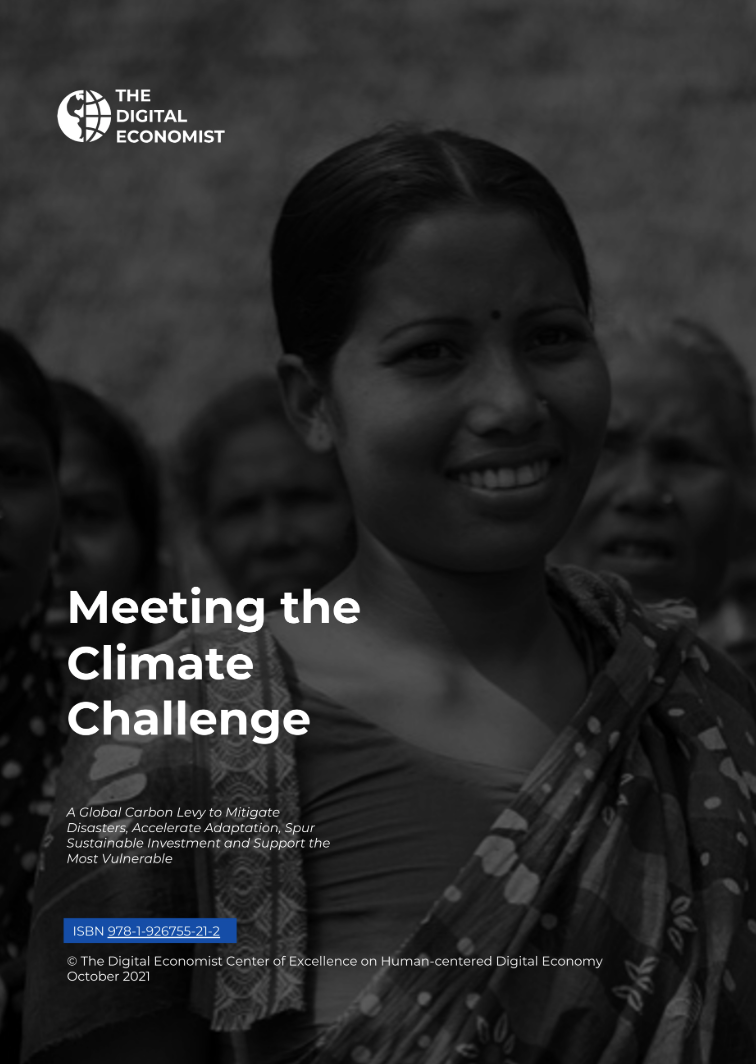
The climate crisis is no longer a distant risk but an immediate and existential challenge, defined by escalating environmental degradation, systemic inequality, and insufficient collective response. Meeting the Climate Challenge presents a comprehensive call to action, framing climate resilience as a shared global responsibility that requires converging digital and physical systems to achieve sustainable, inclusive outcomes. Positioned within the broader context of international frameworks such as the UNFCCC, the Glasgow Climate Pact, and the United Nations Sustainable Development Goals, the publication underscores the urgency of mobilizing resources, coordination, and political will to address the “triple crisis” of pollution, climate change, and biodiversity loss.
The paper brings together six interconnected strands of thought leadership, each addressing a critical dimension of the climate transition. It explores mechanisms for financing climate action, including a proposed global carbon levy; introduces a six-dimensional framework—Disarmament, Development, Dignity, Decentralization, Digitization, and Decarbonization—to guide systemic transformation; and advances a renewed social contract grounded in climate, social, and economic justice. It further examines the role of citizen-driven energy systems, scalable climate solutions across diverse societies, and the importance of inclusive development models, drawing on examples such as Indonesia and India to illustrate pathways toward equitable energy transition.
The publication outlines a coordinated agenda for advancing inclusive climate resilience through collective action, technological convergence, and societal engagement. It emphasizes the need to empower individuals and communities, strengthen collaboration across sectors, and embed shared purpose into climate strategies. Ultimately, the work positions itself as both a roadmap and a catalyst—calling for sustained dialogue, cooperation, and action to ensure that climate solutions are not only effective, but equitable, participatory, and capable of delivering long-term human and planetary outcomes.






.png)