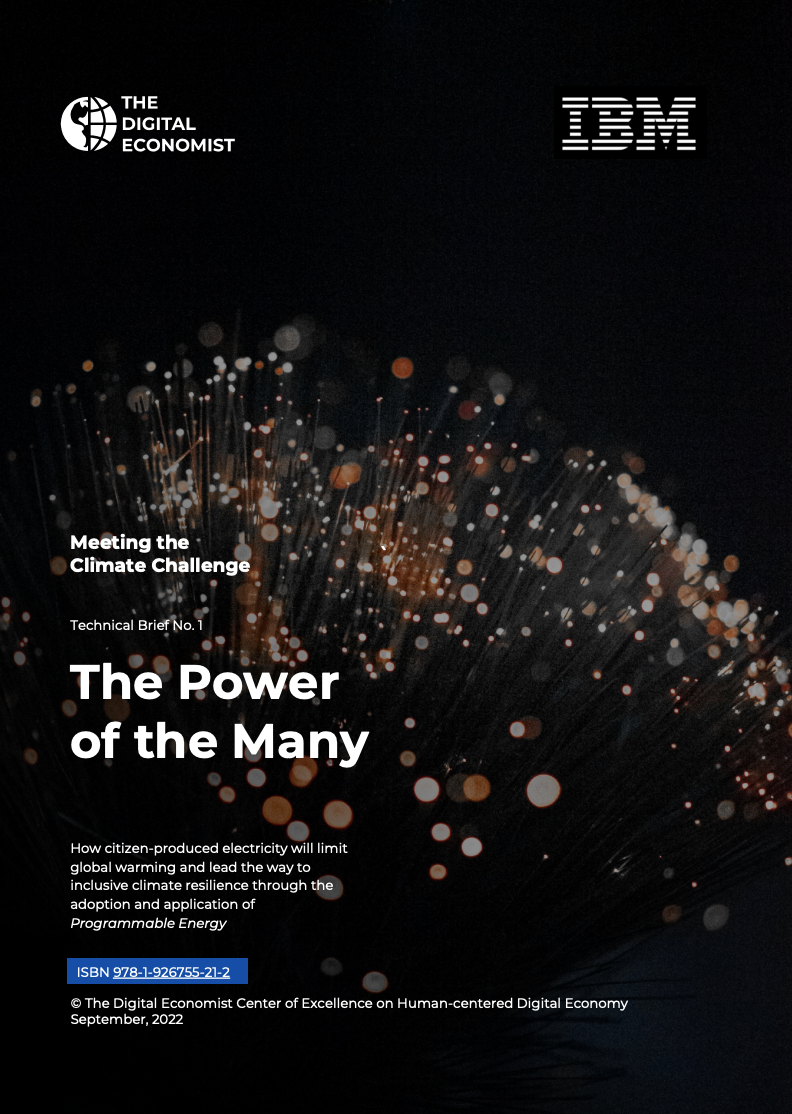
The Power of the Many examines a fundamental shift in how energy is produced, distributed, and valued—moving from centralized systems toward decentralized, citizen-driven models. Positioned within the broader climate emergency, the paper argues that achieving inclusive climate resilience requires not only accelerating renewable energy adoption but also rethinking the structure of energy participation itself. At its core is the concept of Programmable Energy: electricity generated by individuals, tokenized and recorded on blockchain, enabling it to be exchanged, tracked, and valued within emerging digital energy markets.
The paper highlights the rise of the prosumer—individuals who both produce and consume electricity—as a critical actor in this transition. As outlined in the Introduction (page 8), distributed generation through solar, wind, and other renewables introduces new dynamics such as bidirectional energy flows and decentralized grid participation. These shifts challenge legacy grid architectures, which were designed for centralized production, and instead point toward more resilient, flexible systems built on microgrids, smart infrastructure, and digitally coordinated energy exchange.
A central contribution of the paper is its exploration of tokenization as a mechanism to “package” energy into tradable units. As described in the Executive Summary and further illustrated in the token framework, blockchain-enabled tokens allow energy to be allocated, traded, and settled across markets—transforming electricity from a continuous flow into a programmable asset. This enables new business models, from peer-to-peer energy trading to carbon tracking and green finance instruments, while enhancing transparency, efficiency, and inclusion across the energy ecosystem.
Ultimately, the paper positions programmable, citizen-produced electricity as both a technological and systemic lever for climate action. By integrating digital technologies such as IoT, AI, and blockchain with renewable infrastructure, it outlines a pathway toward democratized energy systems that are more resilient, participatory, and aligned with net-zero goals. The transition, however, requires coordinated advances in regulation, market design, and global standards to fully unlock the potential of decentralized energy economies.








.jpg)