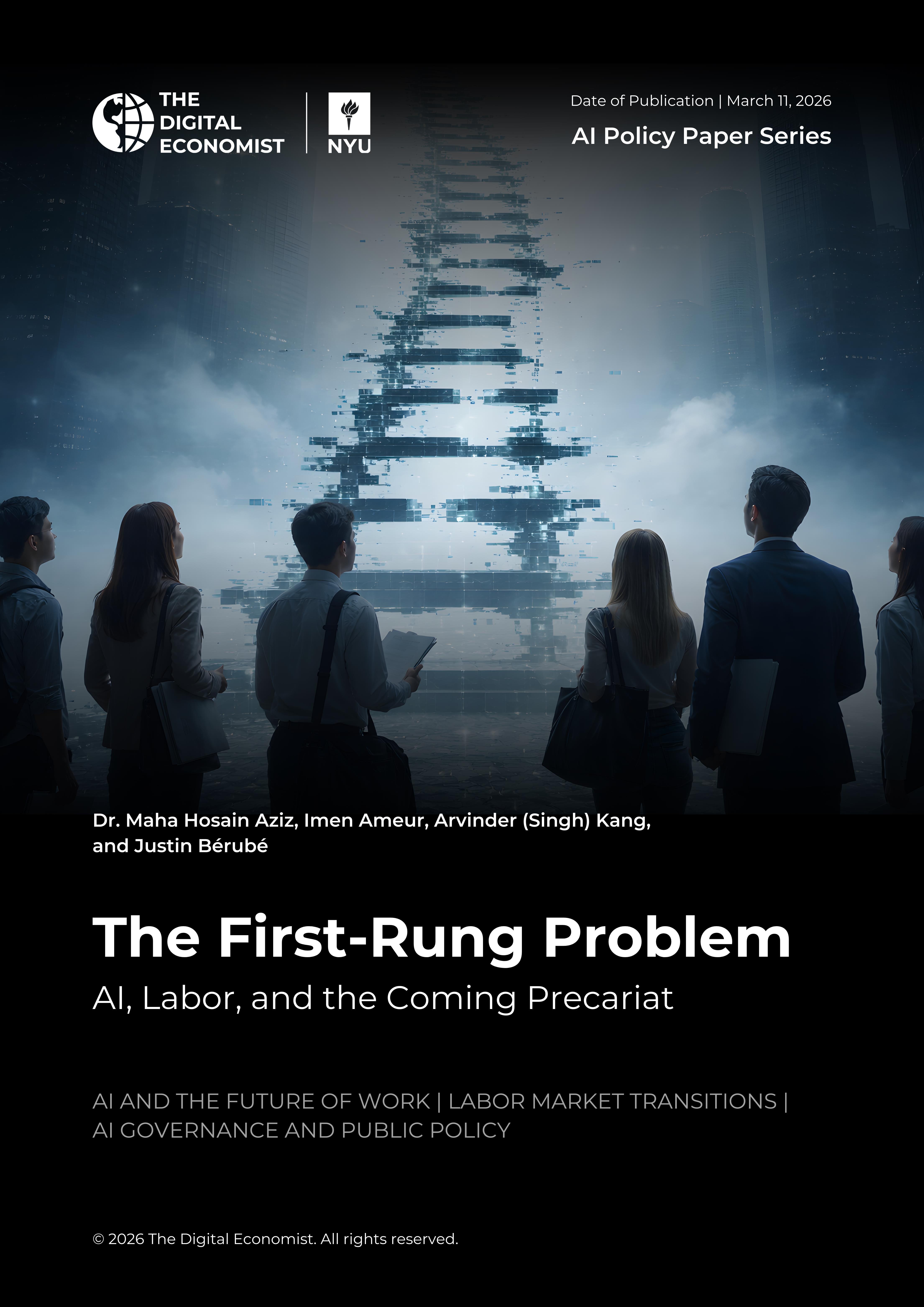
Artificial intelligence is transforming labor markets—but the most immediate disruption may not appear as mass unemployment. Instead, the first signs are emerging through entry-level hiring compression, shifting task structures, and narrowing pathways into skilled careers. This policy paper examines how AI-driven changes in the nature of work could produce a “missing cohort” of early-career professionals and contribute to the formation of an AI precariat—workers structurally excluded from AI-enabled prosperity despite continued economic growth.
Drawing on emerging labor-market data, sectoral analysis, and cross-country sentiment indicators, the paper introduces the AI Anxiety Index, a comparative early-warning tool designed to identify where technological disruption may translate into social anxiety and institutional strain. It argues that the central policy challenge is not simply managing automation, but preserving career mobility, institutional trust, and inclusive access to opportunity during the AI transition.
The paper concludes with a set of enforceable policy recommendations, including AI Labor Impact Statements, career-ladder preservation mechanisms, transition-ready safety nets, and international cooperation through a Global AI Workforce Compact. Together, these proposals outline a governance agenda aimed at aligning AI-driven productivity gains with social stability, workforce resilience, and long-term economic competitiveness.


















.jpg)