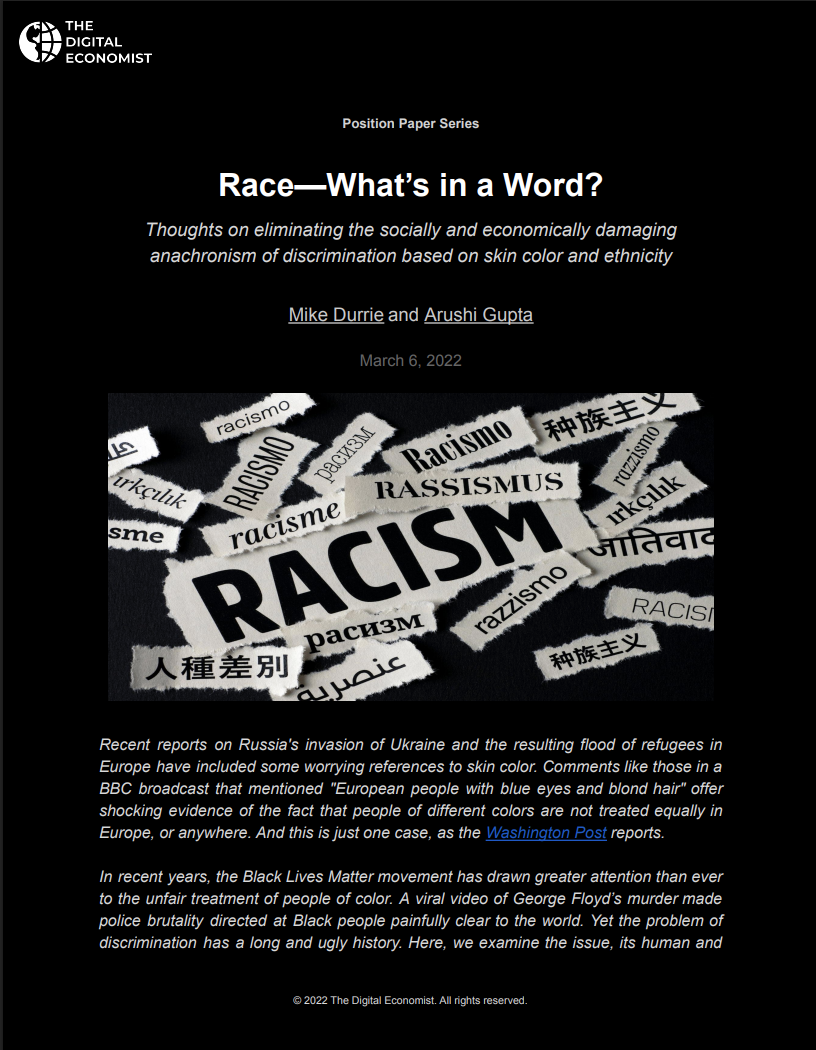
Discrimination based on skin color and ethnicity remains deeply embedded in societies worldwide, shaping inequities across economic, legal, and social systems. Race—What’s in a Word? examines the historical origins and contemporary consequences of racial categorization, arguing that the concept of “race” itself is a socially constructed and scientifically unfounded framework that continues to enable exclusion and injustice. From its roots in the Spanish Inquisition to its role in colonialism, eugenics, and modern systemic inequality, the paper situates racial discrimination as both a historical legacy and an ongoing structural challenge with global implications.
The paper analyzes how discrimination manifests across legal systems, labor markets, education, and public institutions, highlighting persistent disparities in income, employment, incarceration, and access to opportunity. It explores the legal complexities of defining and addressing discrimination, noting the tension between the use of “race” as a protective legal category and its problematic scientific and social foundations. The analysis also examines the broader economic costs of inequality, demonstrating how exclusion reduces productivity, limits human potential, and imposes significant macroeconomic losses. Additionally, it engages with frameworks such as critical race theory to distinguish between equality and equity, emphasizing the need to address systemic disadvantages rather than relying solely on formal equal treatment.
The paper outlines a set of policy and societal interventions aimed at dismantling discriminatory structures and advancing equitable outcomes. It calls for the gradual retirement of the term “race” in favor of more precise and less harmful language, the integration of inclusive education at early stages of development, and the adoption of policies that promote diversity, equity, and inclusion across institutions. By linking ethical imperatives with economic rationale, the paper positions equity not only as a moral necessity but as a strategic driver of societal and economic resilience, underscoring the importance of language, policy, and collective action in shaping a more inclusive future.