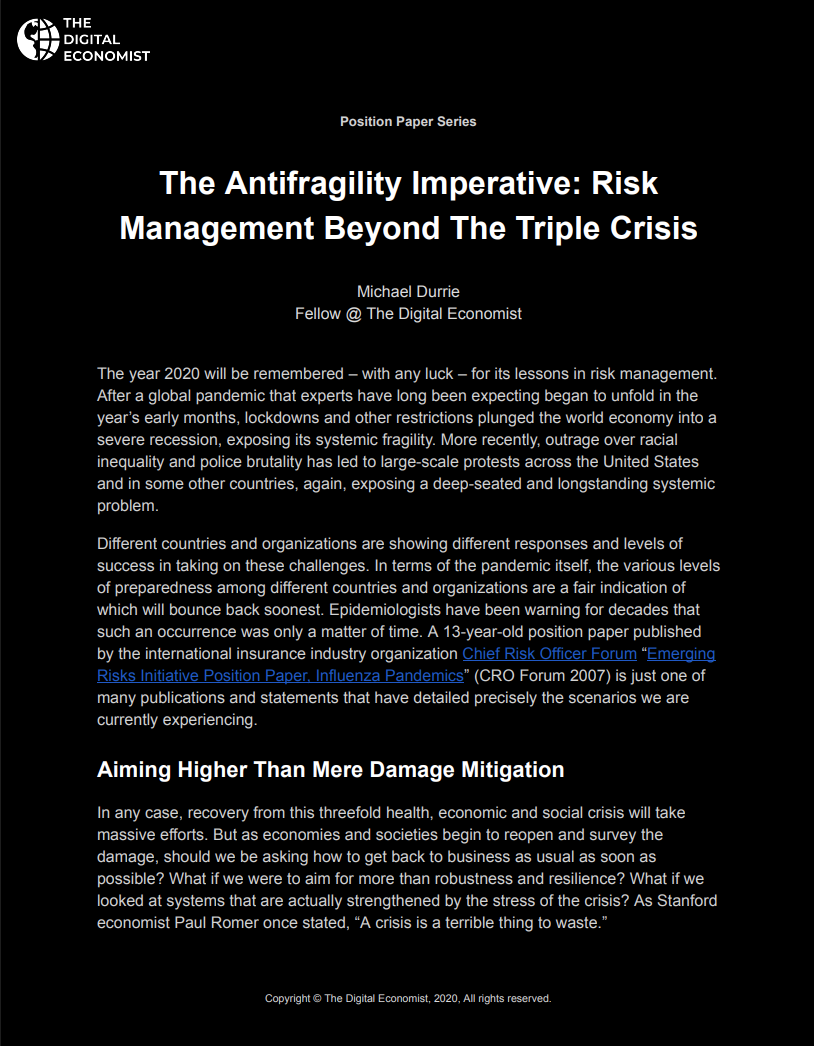
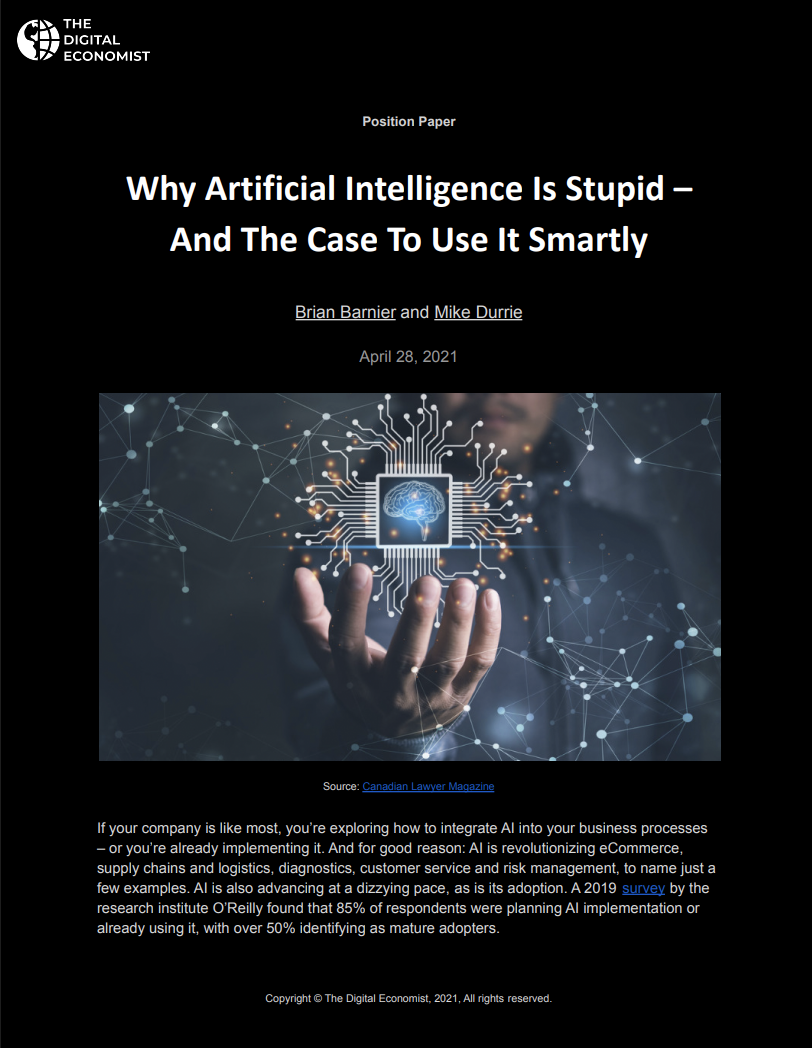
The rapid rise of digital technologies has positioned them as foundational pillars of the global economy, yet their underlying fragility remains largely underestimated. The Gray Rhino in the Room: The Fragility of Digital Technologies examines how the COVID-19 pandemic exposed deep structural weaknesses in global systems, while also reinforcing widespread reliance on digital infrastructure. Framed around the concept of a “gray rhino”—a highly probable, high-impact but neglected risk—the paper argues that current optimism around digital-led recovery may be overlooking systemic vulnerabilities that could significantly disrupt future growth.
The paper analyzes a range of interconnected risks that threaten the stability of digital ecosystems. It highlights geopolitical tensions, climate change, and potential food insecurity as macro-level stressors that can destabilize the environments in which digital technologies operate. At the infrastructure level, it examines vulnerabilities such as cyberattacks on power grids, fragmentation of the global internet, and exposure of highly concentrated supply chains—for example, semiconductor production dependencies. It also underscores the growing scale of cybersecurity threats and the economic costs associated with data breaches, as well as the potential for reduced investment in digital infrastructure due to competing fiscal priorities. As illustrated through data and examples (e.g., the performance gap between major tech firms and the broader market on page 2), the increasing centrality of digital platforms further amplifies systemic risk.
The paper outlines strategic principles for mitigating these vulnerabilities and building more resilient digital systems. It calls for simplification of complex dependencies, decentralization of infrastructure and decision-making, and the adoption of agile organizational models capable of responding to rapid change. By emphasizing both resilience and antifragility, the paper argues that organizations must not only withstand disruption but also adapt and strengthen in response to it. Ultimately, it positions preparedness for “known unknowns” as essential to navigating an increasingly uncertain landscape—where the greatest risks may be those already visible, yet insufficiently addressed.