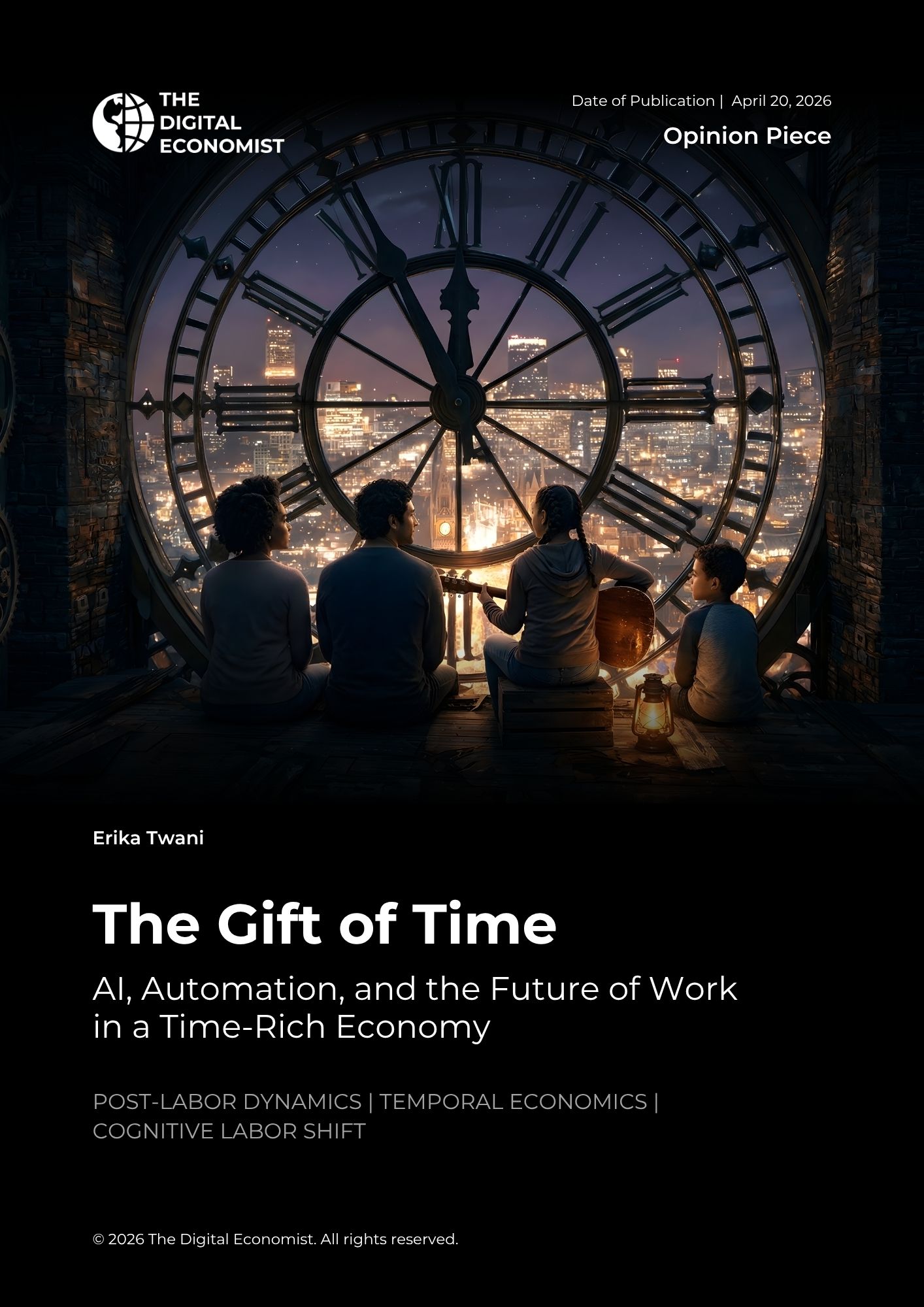
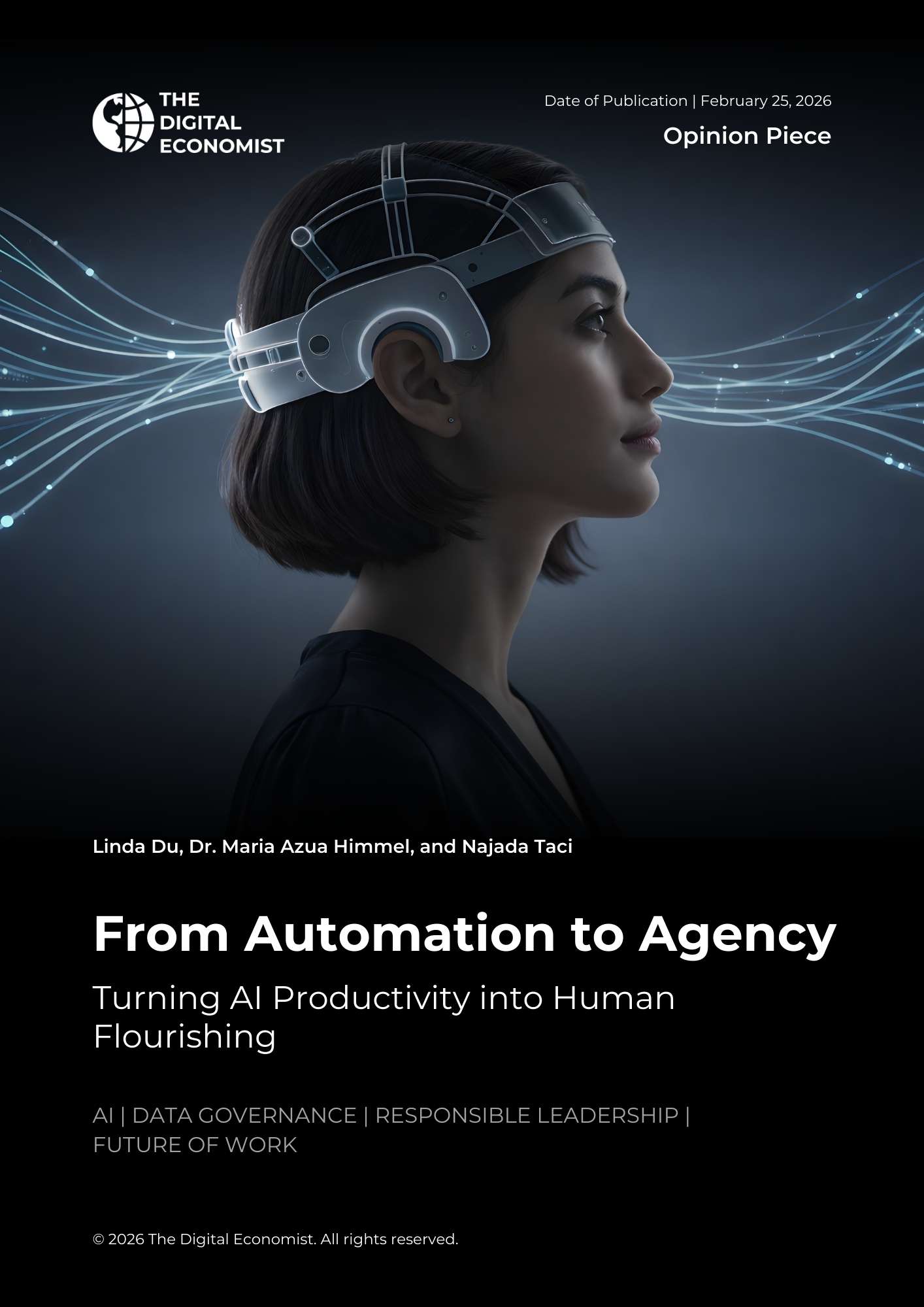
As AI advances, it returns something more valuable than incremental efficiency gains: time. The Gift of Time: AI, Automation, and the Future of Work in a Time-Rich Economy argues that intelligent systems are compressing workflows and reducing routine cognitive and operational burdens at scale—reshaping how work is structured and how value is created. This opinion piece examines the compression of work across sectors, shifts in employment structures, and the implications of an economy in which machines perform an increasing share of necessary tasks.
From an education perspective, it outlines two diverging futures in a time-rich society: one in which reclaimed time supports learning, creativity, and civic engagement, and another in which it is absorbed by attention-maximizing digital systems. The paper contends that leaders across education, policy, and industry must make deliberate choices about how AI-generated time is distributed and used. It proposes that governance frameworks incorporate time-based metrics alongside financial returns, and that closing the reskilling divide is essential to ensuring that the time dividend expands inclusion rather than deepening inequality. By treating time as a first-class economic and ethical variable, the paper positions AI not only as a driver of productivity but as a lever for long-term human flourishing.












.jpg)

.jpg)
.jpg)
.png)