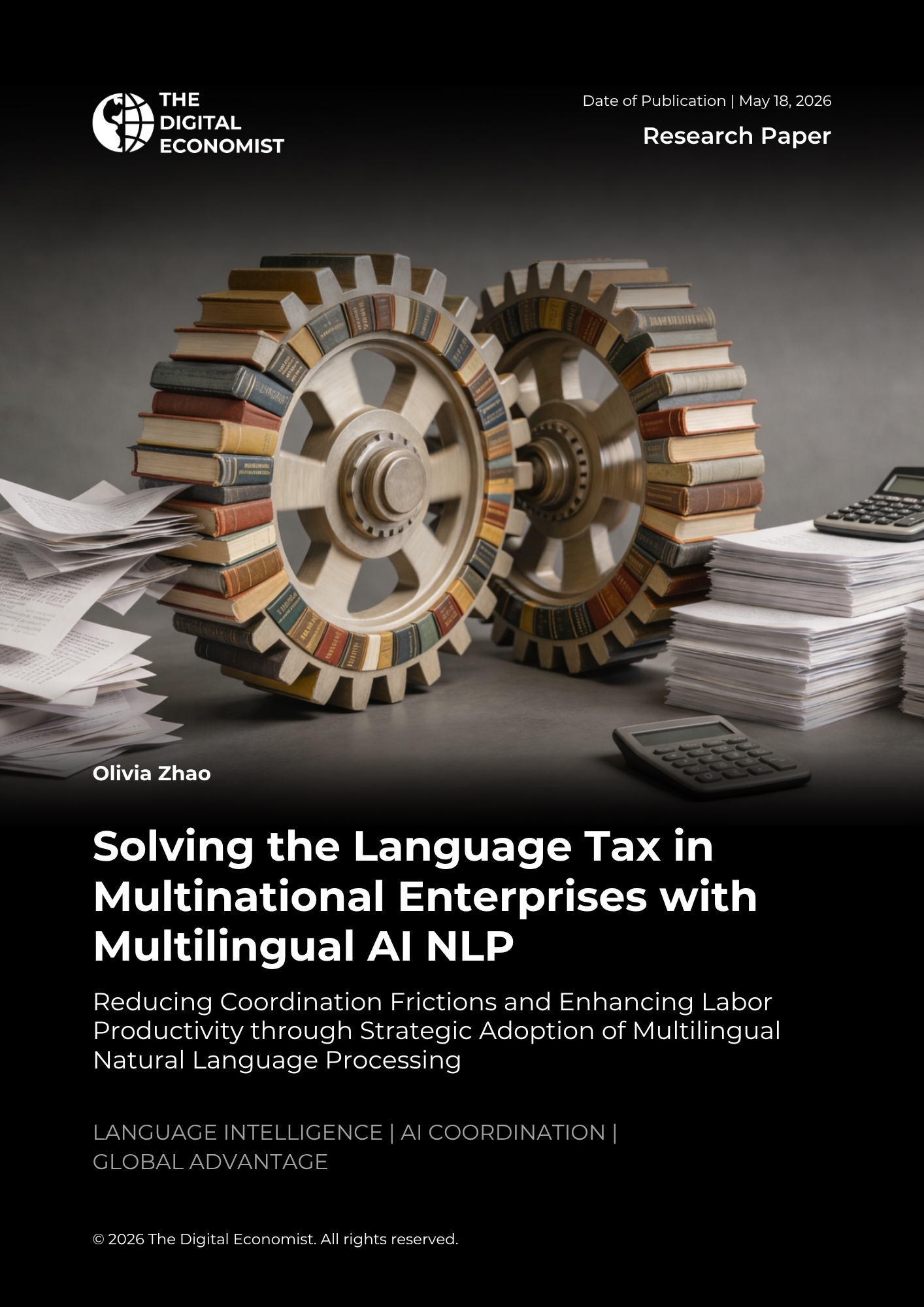
Solving the Language Tax in Multinational Enterprises with Multilingual AI NLP explores how multilingual AI-powered natural language processing (NLP) technologies are transforming the way multinational enterprises coordinate, communicate, and operate across linguistic and cultural boundaries. Framed through the lens of transaction cost economics, the paper examines the hidden “language tax” imposed by miscommunication, translation inefficiencies, and fragmented organizational workflows—costs that can materially impact productivity, collaboration, and global competitiveness. Through empirical research, enterprise case studies, and economic modeling, the paper demonstrates how multilingual NLP systems function as coordination technologies that reduce communication friction, streamline cross-border operations, and enhance labor productivity across industries.
The paper further analyzes adoption patterns, implementation frameworks, and the strategic implications of multilingual NLP deployment across sectors including finance, manufacturing, healthcare, and global commerce. It addresses both the opportunities and risks associated with enterprise-scale AI integration—from productivity gains, customer engagement, and accelerated market expansion to governance challenges involving bias, semantic accuracy, compliance, and data privacy. By positioning language as a form of organizational infrastructure rather than a secondary operational concern, the paper argues that enterprises investing in multilingual NLP will be better equipped to coordinate globally, compete more effectively, and navigate the evolving digital economy.











.jpg)









.jpg)

.jpg)
.png)