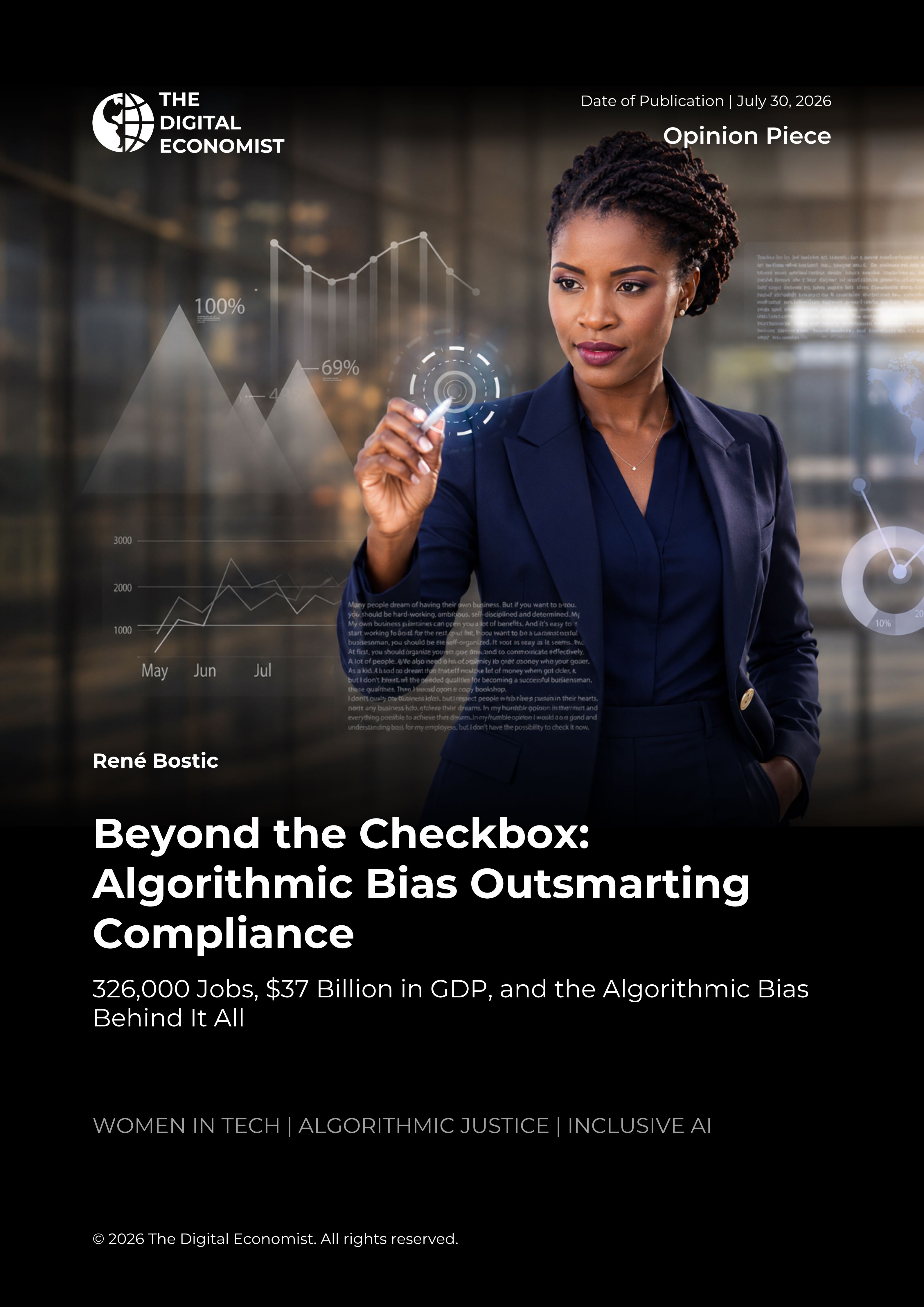
Beyond the Checkbox: Algorithmic Bias Outsmarting Compliance: 326,000 Jobs, $37 Billion in GDP, and the Algorithmic Bias Behind It All examines the escalating unemployment crisis affecting Black women in the United States, documenting the loss of an additional 326,000 jobs in 2025 and the broader economic consequences, including an estimated $37 billion reduction in US GDP. This opinion piece explores how historical bias, AI-driven employment systems, and evolving legal and policy landscapes are converging to reshape workforce outcomes.
The analysis addresses the following key areas:
- Presents evidence from US Bureau of Labor Statistics (BLS) data, federal litigation, and news reporting to illustrate the scale and economic impact of the crisis.
- Examines how artificial intelligence accelerates job displacement through algorithmic bias and automation, with an outsized impact on Black women who are heavily concentrated in AI-vulnerable occupations, including office and administrative support, healthcare support, and sales-related roles.
- Introduces Causal Fairness as the gold standard first step in an AI Fairness Intervention Workflow, explaining how it moves beyond identifying what disparate outcomes are occurring to understanding why they occur, through techniques such as mapping hidden bias pathways, identifying proxy variables, and providing mathematical proof of direct versus indirect discrimination.
- Recommends five actionable priorities for industry leaders, including intersectional bias testing, embedding fairness into AI systems from the outset, and aligning with emerging governance frameworks such as the Colorado AI Act and the EU AI Act.
Ultimately, this paper highlights that organizations can lead the way in developing responsible AI by making intersectional fairness a fundamental design principle rather than an afterthought. Those who act now can mitigate litigation risks, strengthen AI governance, recover lost economic productivity, and establish themselves as employers of choice for highly skilled, high-performing talent. Advancing intersectional AI fairness is both an ethical obligation and a measurable competitive advantage.













.jpg)

.jpg)
.jpg)
.png)